
Ironman 70.3 vs Full Ironman: Which Distance Is Right for You?
- Posted on
- By Blue Cycles Team
- 0
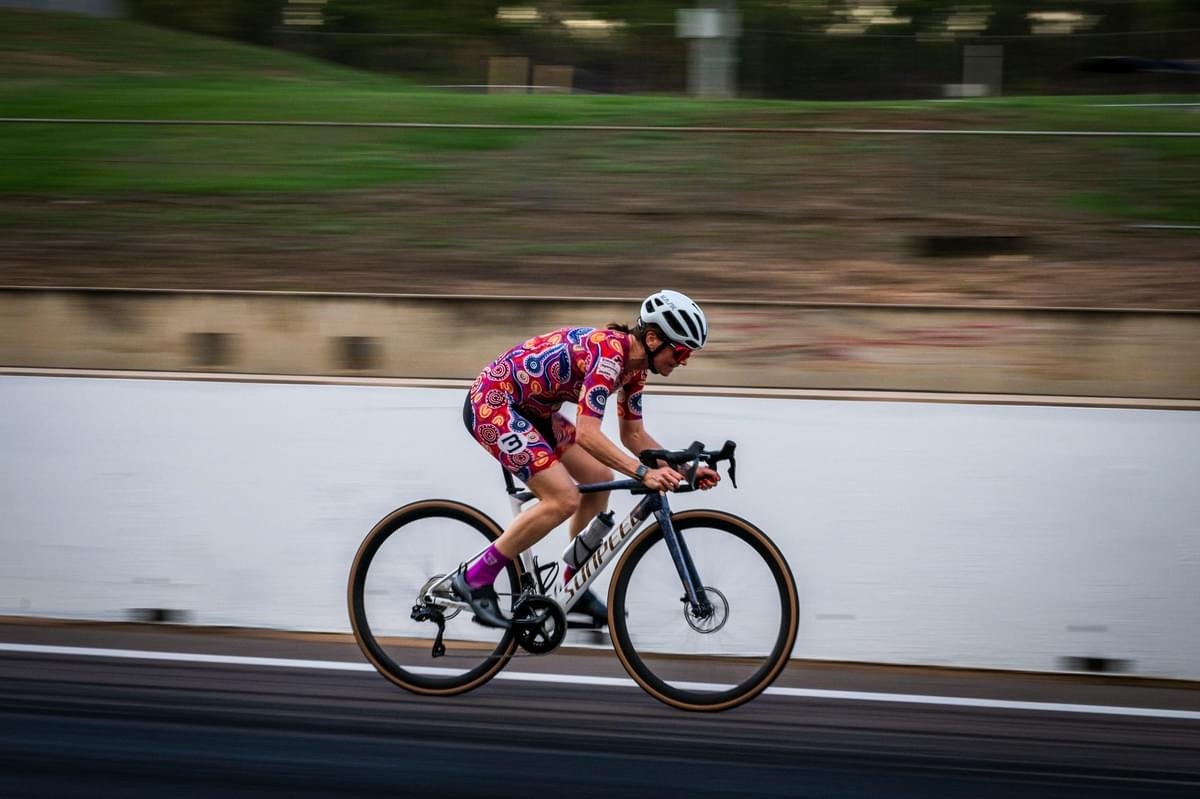
Ironman 70.3 vs Full Ironman — distances, training loads, costs and gear. Expert triathlon Darwin advice from the Blue Cycles team with 12+ Ironman finishes.
Ironman 70.3 vs Full Ironman: Which Distance Is Right for You?
If you've finished a sprint or Olympic triathlon and you're now looking at longer races, the question is almost always the same: 70.3 or full Ironman? It sounds like a simple step-up decision. It isn't. The two distances demand a fundamentally different relationship with training time, budget, and mental endurance. Here's the honest breakdown from a team with 75+ combined years of triathlon experience and 12+ Ironman finishes, including world championships.
The Distances, Side by Side
Start with the numbers:
- Ironman 70.3: 1.9 km swim / 90 km bike / 21.1 km run (half marathon)
- Full Ironman: 3.8 km swim / 180 km bike / 42.2 km run (full marathon)
On paper, a full is roughly double. In practice, the fatigue compounds in a way that makes it feel significantly harder than twice the effort. The bike leg doubles from 90 km to 180 km before you run a marathon — that's the point where your preparation and your equipment are tested completely.
Training Time: The Real Gap
A solid 70.3 build runs 16–20 weeks and peaks at 10–14 hours of training per week — manageable alongside a full-time job. A full Ironman build runs 20–26 weeks and regularly peaks at 15–20+ hours per week in the final months. If you haven't trained consistently at 12+ hours a week for a sustained block, the full will expose that on race day. The 70.3 gives you a structured way to build that volume without the consequence of a 12-hour race if you get it wrong.
Cost Difference — Entry, Travel, and Gear
- Entry fees: 70.3 events typically run $300–350 AUD; full Ironman events run $700–850 AUD and sell out months in advance.
- Travel: Darwin athletes commonly race Ironman Cairns in June — close to Darwin and similarly hot and humid, making it the most natural target for northern athletes. Ironman Western Australia in Busselton (December) is flat and fast, a favourite for athletes chasing their first full Ironman time. Mooloolaba on the Sunshine Coast is a classic 70.3. Factor in flights and 3–4 nights accommodation for any of these events.
- Nutrition: A full Ironman athlete burns through 2–3× the on-course calories of a 70.3. That adds up in training and on race day.
Physical Demands — Where the Full Changes Everything
The swim difference is real but manageable for a trained swimmer. The run difference — half marathon versus marathon — is coachable with the right build. The bike leg is where the full Ironman separates itself entirely. Riding 180 km before a marathon, having already swum nearly 4 km, is a different category of physical and mental challenge.
Mental endurance becomes a primary discipline in a full Ironman in a way that shorter races never quite replicate. Athletes who've never spent 10–12 hours racing consistently underestimate the cognitive and emotional management required in the back half of the run. The 70.3 gives you a compressed but genuine version of that experience — dark patches included — at a duration where the consequences of getting it wrong are smaller.
Should You Do an Ironman 70.3 or Darwin Triathlon Full Distance First?
Do a 70.3 first if: you have fewer than two years of consistent triathlon training, you haven't raced an Olympic distance under controlled fatigue, your weekly volume is under 10 hours, or you want to dial in race nutrition and bike fit before committing to 140.6 miles.
Consider going straight to a full if: you have a strong endurance background (marathon, ultra-running, long-course swimming), you've raced multiple Olympic distances and your body handles volume well, and you have a full season of dedicated training ahead.
Most athletes belong in the first group. A well-executed 70.3 is a serious achievement and a far better foundation for a future full Ironman than a poorly-prepared 140.6 finish.
Why the Bike Matters More at 70.3 and Beyond
At sprint distance, an entry-level bike with an average position is survivable. At 70.3 and beyond, that changes. The bike leg is the longest segment by time, and a poorly fitted frame accumulates fatigue through the hips, lower back, and hamstrings that shows up on the run. A professional fit on a quality carbon bike is a performance and injury-prevention tool, not a luxury.
The Sunpeed Victory Sport 105 Mechanical ($2,999), Victory Expert 105 Di2 ($3,999), and Victory Expert Ultegra Di2 ($4,799) are full carbon road bikes built for exactly this step up. Every purchase at Blue Cycles includes a professional bike fit at no extra cost. Athletes going fully aero for 70.3 and full Ironman racing can also step up to the Sunpeed Interstella TT bike from $6,500 — a dedicated time trial frame that delivers real time savings on flat courses like Busselton. Call or come in-store to discuss sizing across the full range.
For more on local racing and how to structure your first step into longer-course triathlon, see our Darwin triathlon beginner guide and the June 2026 Darwin Triathlon Club events roundup.
Ready to Get Race-Ready?
Come into Blue Cycles in Coconut Grove (open 7 days), call 08 8985 3921, or browse our triathlon bikes at bluecyclesonline.com.au. Every bike comes with a professional fit included.
Comments
Be the first to comment...